
Cell Sorting MicroBeads
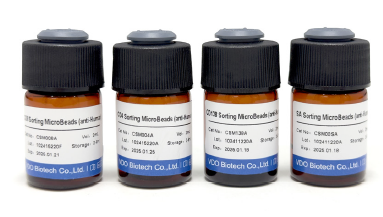
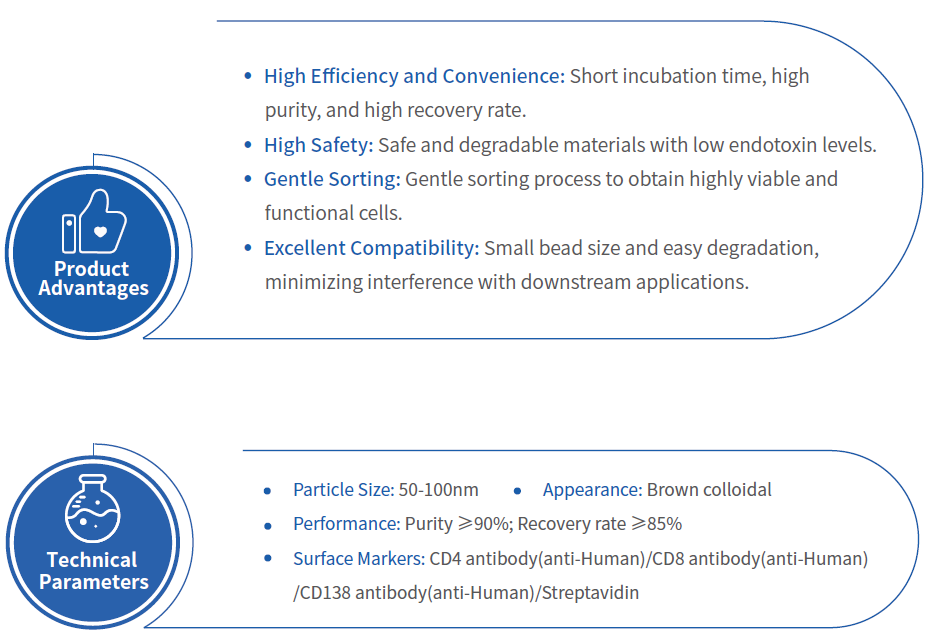
Nanometer-sized cell sorting microbeads can be used for sorting human c ells by conjugating anti-human monoclonal antibodies to the microbeads, facilitating the sorting of target cells. These beads incubate with peripheral blood mononuclear cells (PBMCs) or bone marrow samples and undergo magnetic separation to enrich and isolate target cells, thus purifying them. Vdo Biotech introduces a new series of sorting microbeads, including CD4, CD8, CD138, and SA sorting microbeads, to meet the diverse needs of customers in various scenarios.
CD3 Sorting MicroBeads
Nano-scale CD3 Sorting MicroBeads can be used for the isolation of human CD3+ cells. By conjugating anti-human CD3 monoclonal antibodies onto the microbeads, CD3+ cells can be efficiently sorted. The nano-scale CD3 Sorting MicroBeads are incubated with peripheral blood mononuclear cells (PBMCs) and subjected to magnetic separation, allowing for the enrichment and isolation of CD3+ cells, thereby achieving the purification of CD3+ cells.
Related Application Cases
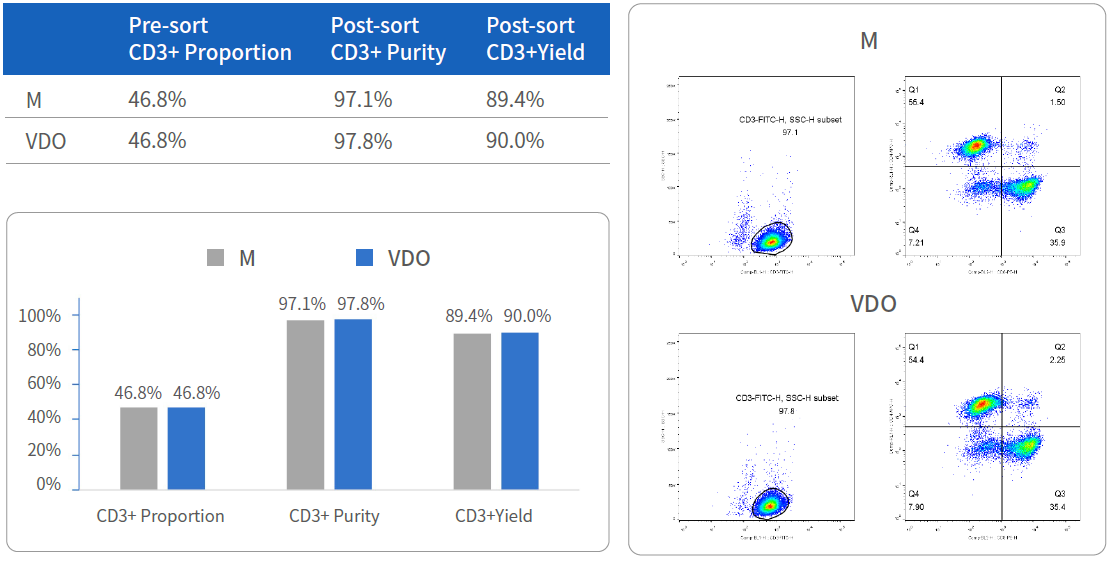
VDO CD3+ Sorting MicroBeads, with CD3+ purity ≥ 95% and yield ≈ 90%, consistent with the competitor M.
CD4 and CD8 Sorting MicroBeads
CD4/CD8 sorting microbeads are efficient tools for cell separation, commonly used in scientific research to precisely separate or enrich CD4+/CD8+ T cells. This technology facilitates researchers in studying the functions and mechanisms of T cell subsets in-depth.
Related Application Cases
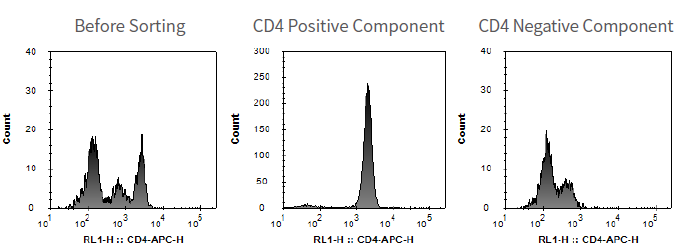
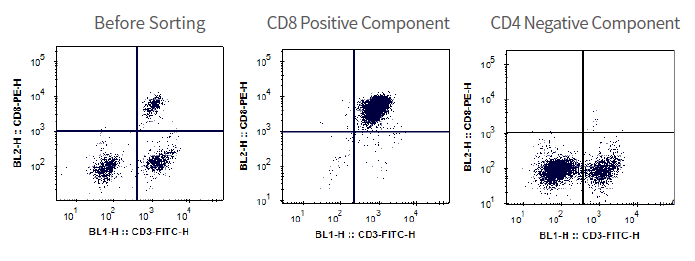
Separation of CD4+ cells from human PBMCs using CD4 sorting microbeads, LS columns, and appropriate separators. The cells are stained with CD4-APC and analyzed by flow cytometry.
Separation of CD8+ cells from human PBMCs using CD8 sorting microbeads, LS columns, and appropriate separators. The cells are stained with flow cytometry antibodies and analyzed by flow cytometry.
CD34 Sorting MicroBeads
Nano-scale CD34 Sorting MicroBeads are designed for the isolation of human CD34+ cells. By conjugating anti-human CD34 monoclonal antibodies onto the microbeads, efficient CD34+ cell sorting is achieved. The CD34 monoclonal antibody has been humanized to reduce its affinity for Fc receptors, eliminating the need for additional Fc receptor blocking agents. The nano-scale CD34 Sorting MicroBeads are incubated with peripheral blood mononuclear cells (PBMCs) or single-cell suspensions expressing CD34, followed by magnetic separation, enabling the enrichment and isolation of CD34+ cells for effective purification.
Related Application Cases
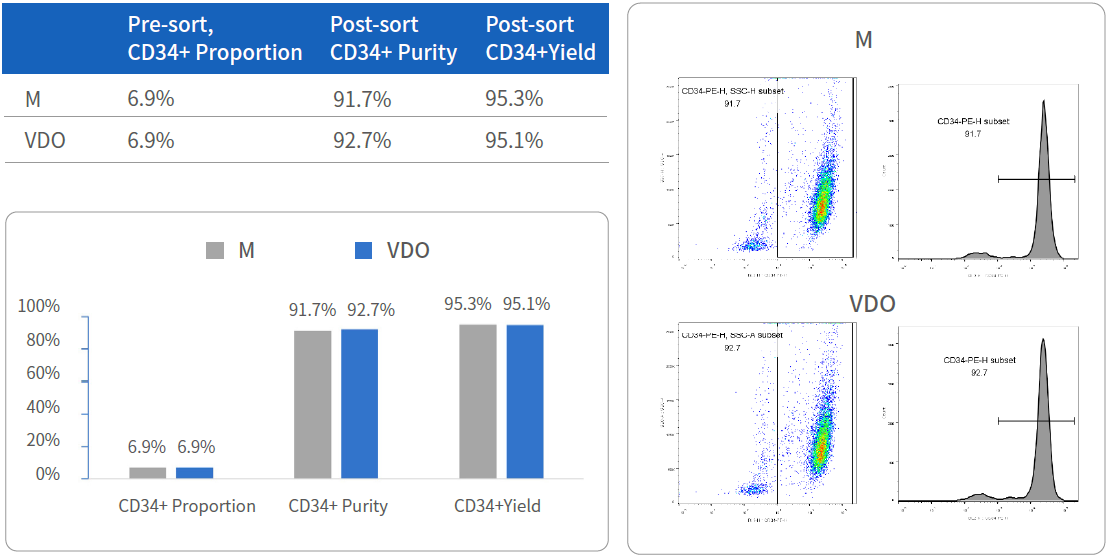
VDO CD34+ Sorting MicroBeads, with CD34+ purity ≥ 90% and yield ≥ 95%, consistent with the competitor M.
CD138 Sorting MicroBeads
CD138 sorting microbeads are typically used in whole blood or bone marrow incubation, achieving target cell enrichment and separation through magnetic separation. This process effectively purifies CD138+ cells, supporting researchers in exploring related diseases such as myeloma.
Related Application Cases
Separation of CD138+ cells from quality control samples using CD138 beads, LS columns, and appropriate separators. The cells are stained with CD138-APC and analyzed by flow cytometry.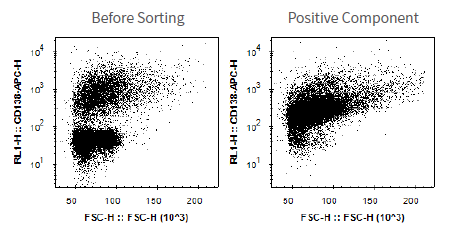
SA Sorting MicroBeads
SA (Streptavidin) sorting microbeads, with a diameter of 50 nm, are degradable microbeads widely applicable in various scientific research fields, including but not limited to molecular biology, cell sorting, and drug delivery. By efficiently coupling SA to the bead surface and utilizing biotinylated antibodies, precise and gentle target cell sorting can be achieved, ensuring high purity, activity, and yield of target cells. This bead product seamlessly integrates with downstream processes such as cell culture and gene sequencing, providing researchers with efficient and convenient experimental tools.
Related Application Cases
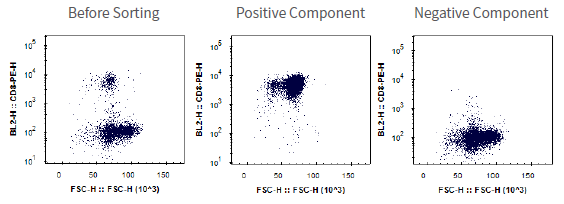
Separation of CD8+ cells from human PBMCs using biotinylated anti-human CD8 antibody, SA beads, LS columns, and appropriate separators. The cells are stained with CD8-PE and analyzed by flow cytometry.
Ordering Information
| Product Name | Catalog no. | Size | Quantity | Cell Sorting Technologies |
| CD3 NanoBeads, human | CS1001-1 | 1×10⁸ total cells | 200 μL | Column-based |
| CS1001-2 | 1×10⁹ total cells | 2 mL | Column-based | |
| CD4 NanoBeads, human | CS1002-1 | 1×10⁸ total cells | 200 μL | Column-based |
| CS1002-2 | 1×10⁹ total cells | 2 mL | Column-based | |
| CD8 NanoBeads, human | CS1003-1 | 1×10⁸ total cells | 200 μL | Column-based |
| CS1003-2 | 1×10⁹ total cells | 2 mL | Column-based | |
| CD34 NanoBeads, human | CS1004-1 | 2×10⁸ total cells | 200 μL | Column-based |
| CS1004-2 | 2×10⁹ total cells | 2 mL | Column-based | |
| CD138 NanoBeads, human | CS1005-1 | 2×10⁸ total cells | 200 μL | Column-based |
| CS1005-2 | 2×10⁹ total cells | 2 mL | Column-based | |
| Streptavidin NanoBeads | CS1006-1 | 2×10⁸ total cells | 200 μL | Column-based |
| CS1006-2 | 1×10⁹ total cells | 2 mL | Column-based | |
| NK Cell Isolation Kit, human | CS1009-1 | 1×10⁸ total cells | 200 μL Beads + 100 μL Antibody Cocktail | Column-based |
| CS1009-2 | 1×10⁹ total cells | 2 mL Beads + 1 mL Antibody Cocktail | Column-based | |
| VDS Neutrophil Isolation Kit, human | CS1010-1 | 1×10⁸ total cells | 100 μL Beads + 100 μL Antibody Cocktail | Column-free |
| CS1010-2 | 1×10⁹ total cells | 1 mL Beads + 1 mL Antibody Cocktail | Column-free | |
| VDS Streptavidin MicroBeads | CS1011-1 | 1×10⁸ total cells | 200 μL | Column-free |
| CS1011-2 | 1×10⁹ total cells | 2 mL | Column-free | |
| Anti-Biotin NanoBeads | CS1012-1 | 1×10⁸ total cells | 200 μL | Column-based |
| CS1012-2 | 1×10⁹ total cells | 2 mL | Column-based | |
| VDS CD138 MicroBeads, human | CS1013-1 | 10 mL whole blood or bone marrow | 1 mL | Column-free |
| CS1013-2 | 50 mL whole blood or bone marrow | 5 mL | Column-free | |
| CS1013-3 | 100 mL whole blood or bone marrow | 2*5 mL | Column-free | |
| VDS Monocyte Isolation Kit, human | CS1014-1 | 1×10⁸ total cells | 100 μL Beads + 100 μL Antibody Cocktail + 100 μL Platelet Removal Reagent | Column-free |
| CS1014-2 | 1×10⁹ total cells | 1 mL Beads + 1 mL Antibody Cocktail + 1 mL Platelet Removal Reagent | Column-free | |
| VDS T cell Isolation Kit, human | CS1015-1 | 1×10⁸ total cells | 100 μL Beads + 100 μL Antibody Cocktail | Column-free |
| CS1015-2 | 1×10⁹ total cells | 1 mL Beads + 1 mL Antibody Cocktail | Column-free | |
| CD14 NanoBeads, human | CS1016-1 | 1×10⁸ total cells | 200 μL | Column-based |
| CS1016-2 | 1×10⁹ total cells | 2 mL | Column-based |
T-Cell Activation Beads
The combined application of anti-CD3 and anti-CD28 antibodies to stimulate T cells in vitro, mimicking the dual signaling necessary for T-cell activation, is the most commonly used approach for T-cell activation and expansion. VDO Biotech's CD3/CD28 T-Cell Activation Beads are designed for sorting, activating, and expanding T lymphocytes, playing a crucial role in the production of cell therapy products and advancing scientific research.
Human CD3/CD28 T-Cell Activation Beads
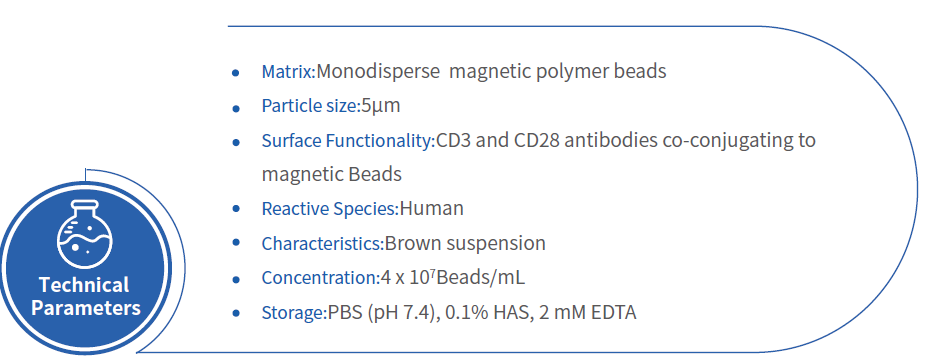
Human CD3/CD28 T-Cell Activation Beads are designed by co-conjugating anti-human CD3 and CD28 monoclonal antibodies on the surface of 5 μm magnetic polymer beads. These beads simulate dual-signal stimulation of T cells in vitro, promoting T cell activation and expansion. These magnetic beads are suitable for sorting, activating, and expanding human T lymphocytes, and can play a significant role in the production of cell therapy products and scientific research.
Application Cases
Cell Activation Testing Using Human PBMC Sample
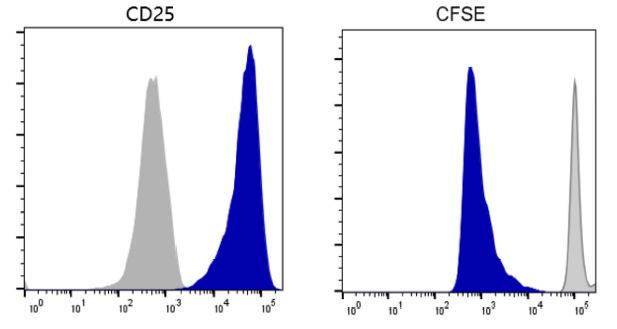
The human PBMCs were stained with CFSE and stimulated and expanded with VDO Biotech’s CD3/CD28 T-Cell Activation Beads. On day 4 of activation, the cells were stained with anti-CD25 APC, and analyzed by a flow cytometer. The results are displayed in the figures below. The blue peak represents the activated cells, while the gray peak represents the unstimulated cells (negative control).
Comparative Testing Using Human PMBC Sample
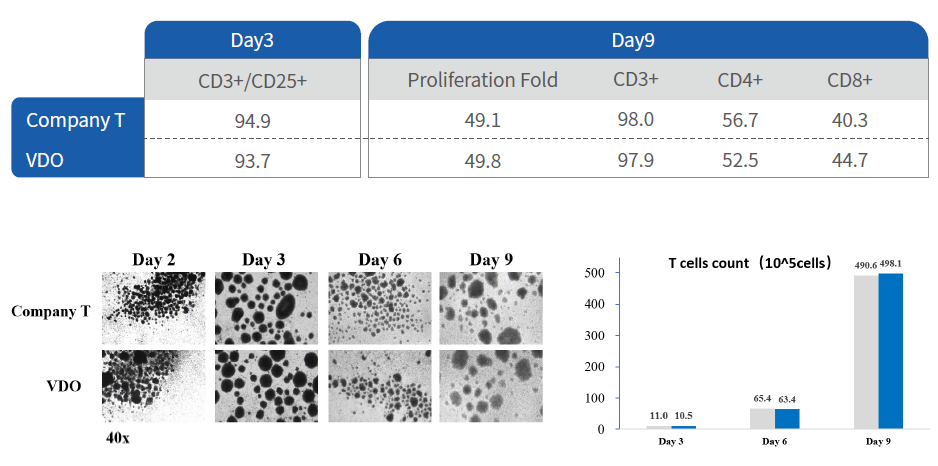
VDO Human CD3/CD28 T-Cell Activation Beads, when tested under the same conditions as the counterpart from Company T, showed results indicating that key indicators such as CD25+ positivity rate, cell proliferation fold, and purity are comparable to those of the T company's product.
Ordering Information
| Product Name | Catalog no. | Size | Quantity |
| Human T cell Activation CD3/CD28 Beads | CS1007-1 | 8×10⁶ T Cells | 200μL |
| CS1007-2 | 8×10⁷ T Cells | 2mL |
Mouse CD3/CD28 T-Cell Activation Beads
The Mouse CD3/CD28 T-Cell Activation Beads from VDO Biotech are designed by co-conjugating anti-mouse CD3 and CD28 monoclonal antibodies on the surface of 5 μm magnetic polymer beads. These beads simulate dual-signal stimulation of T cells in vitro, promoting T cell activation and expansion. These magnetic beads are suitable for sorting, activating, and expanding human T lymphocytes, and can play a significant role in the production of cell therapy products and scientific research.
Cell Activation Testing Using Mouse PBMC Sample
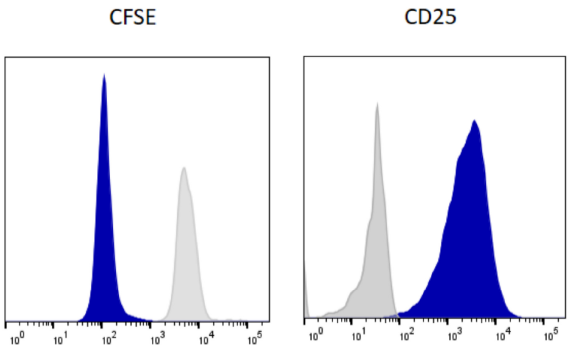
The mouse PBMCs were stained with CFSE and stimulated and expanded with VDO Biotech’s CD3/CD28 T-Cell Activation Beads. On day 4 of activation, the cells were stained with anti-CD25 APC, and analyzed by a flow cytometer. The results are displayed in the figures below. The blue peak represents the activated cells, while the gray peak represents the unstimulated cells (negative control).
Ordering Information
| Product Name | Catalog no. | Size | Quantity |
Mouse T cell Activation CD3/CD28 Beads | CS1008-1 | 8×10⁶ T Cells | 200μL |
| CS1008-2 | 8×10⁷ T Cells | 2mL |
Polyethylenimine (PEI) Transfection Reagent
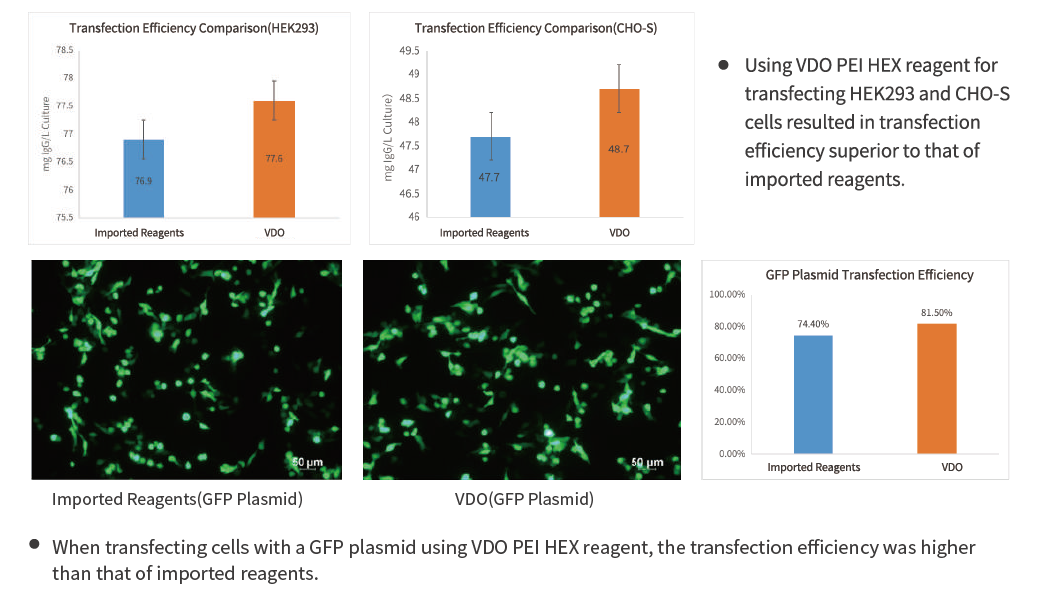
VDO Biotech offers the PEI HEX transfection reagent, a linear polyethylenimine (PEI) with an average molecular weight of 40K. Its side chains are free of acr yl residues, facilitating dissolution and preparation while ensuring better quality control. It is widely applicable for transient transfection of various biomacromolecules, including recombinant protein and antibody transient transfection based on HEK293 cells, as well as antibody transient transfection in CHO cells. Through comprehensive product design and process optimization, VDO is dedicated to providing researchers and pharmaceutical enterprises with more efficient and cost-effective gene transfection solutions, contributing to the innovation and development of gene therapy technologies.
Product Features
Completely linear structure with no acryl residues for better quality control.
Hydrochloride salt form allows for direct dissolution in water for easier use.
Low cytotoxicity with high transfection efficiency.
Comparison Data
Ordering Information
| Name | Catalog Number | Specifications |
| PEI HEX Transfection Reagent | TFPEI40KA-1 | 1g |
| PEI HEX Transfection Reagent | TFPEI40KA-2 | 0.1g |
If you have questions related to product information, or would like to request samples, quotations or demo, please submit your inquiry.
 Search
 Feedback
 Top
Top